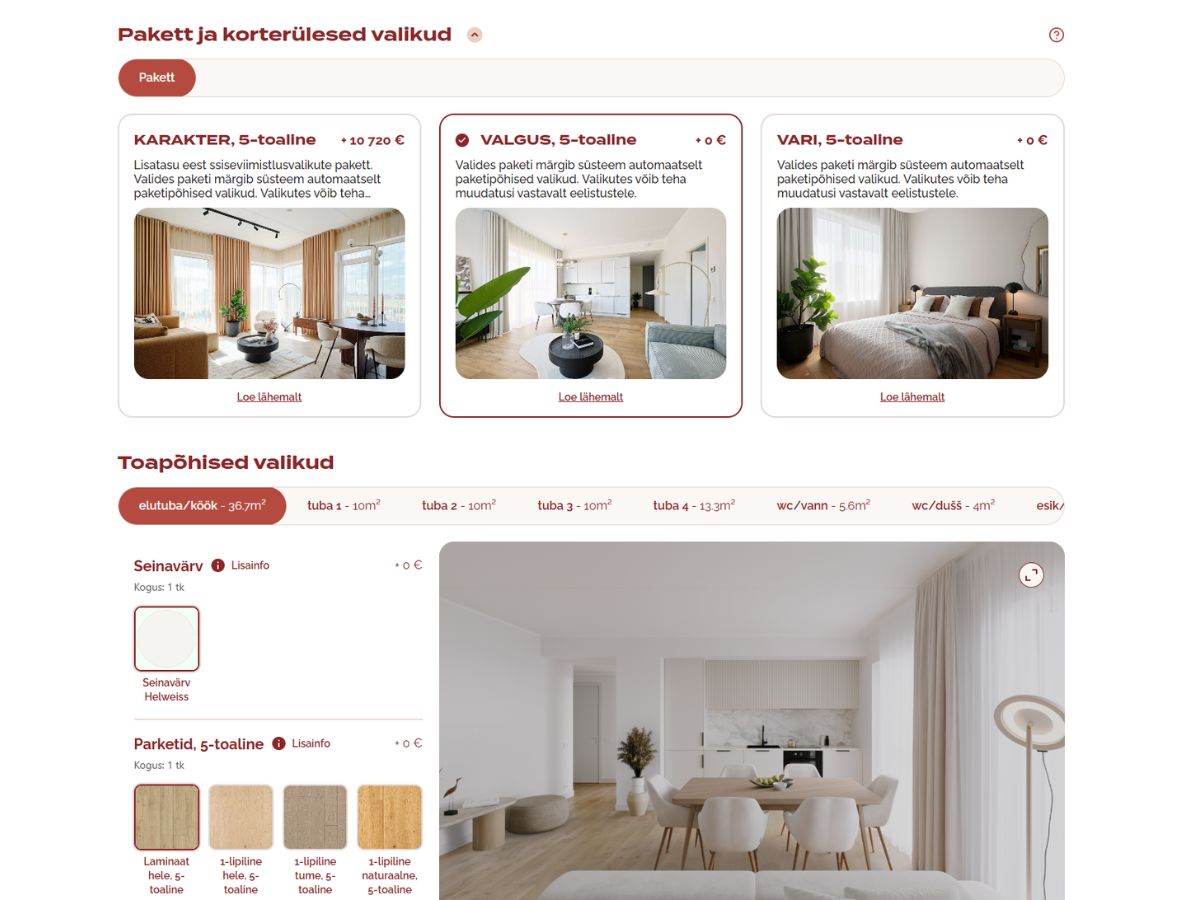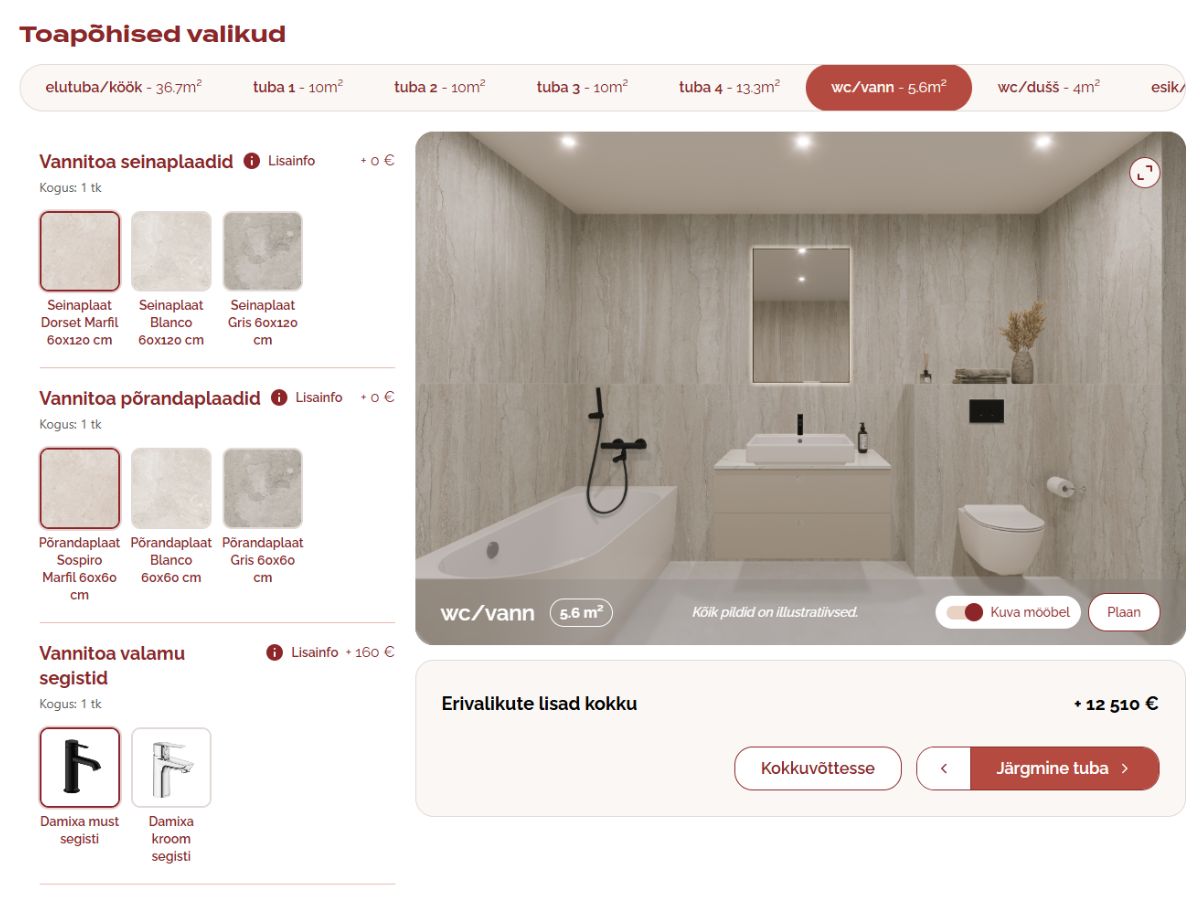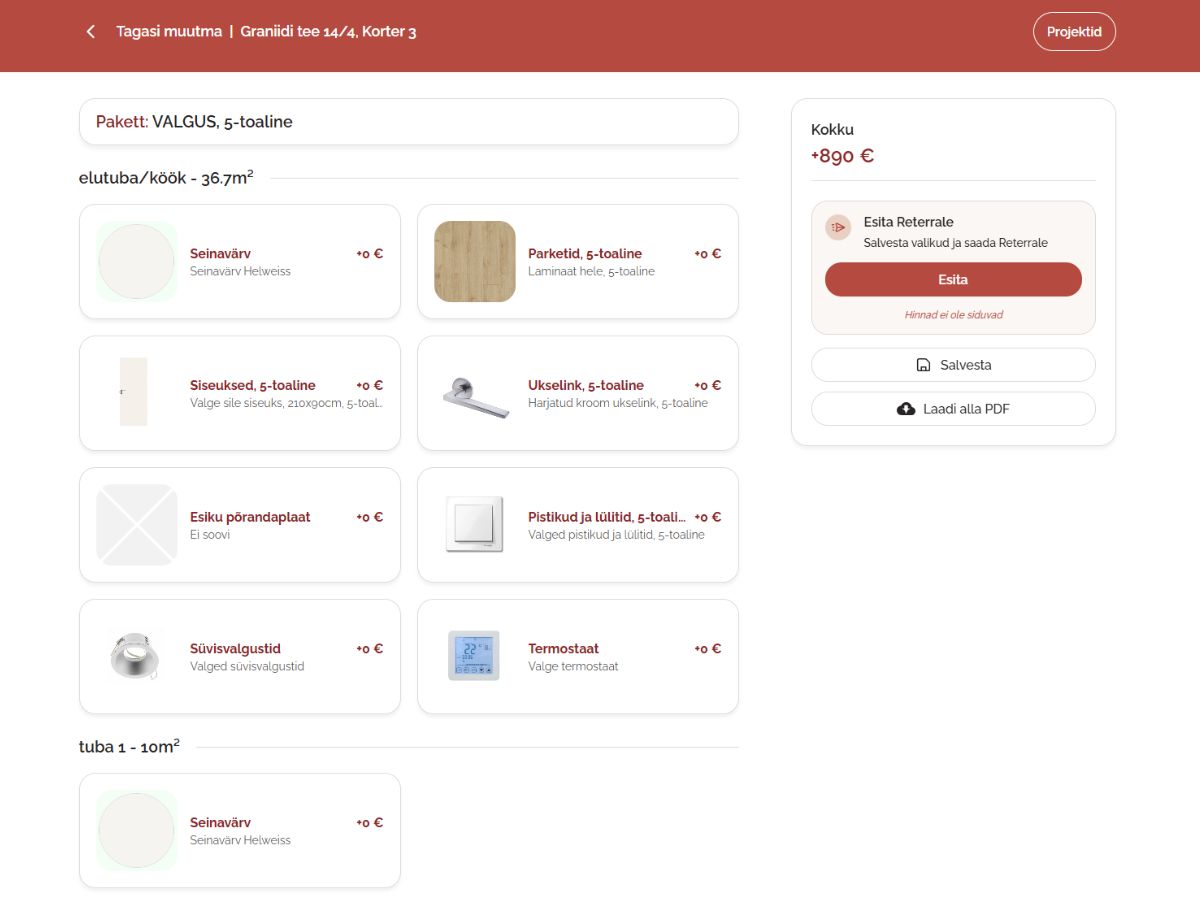


Buyers choose materials and finishes room by room and see the price change with every click. Your team updates products and prices without waiting on anyone.
An apartment configurator is software that lets homebuyers choose their apartment’s finishes online, room by room, with a live price. The developer decides what can be chosen and at what price. Every confirmed choice goes to the builder as a material list, so nothing is copied by hand.
Wabric treats an apartment as one big configurable product:
Buyers use it on your website, under your own brand. Your team runs the catalog, prices and rules.
The hard part isn’t selling the apartment. It’s the hundreds of finishing choices that come after. Wabric takes that work off your team’s desks.
Buyers pick finishes room by room and see the price change with every click. It runs under your name, like Reterra ReDesign.
Add products, change prices and set rules in the back office yourself. New projects are set up from the drawings, so you never wait on an outside partner.
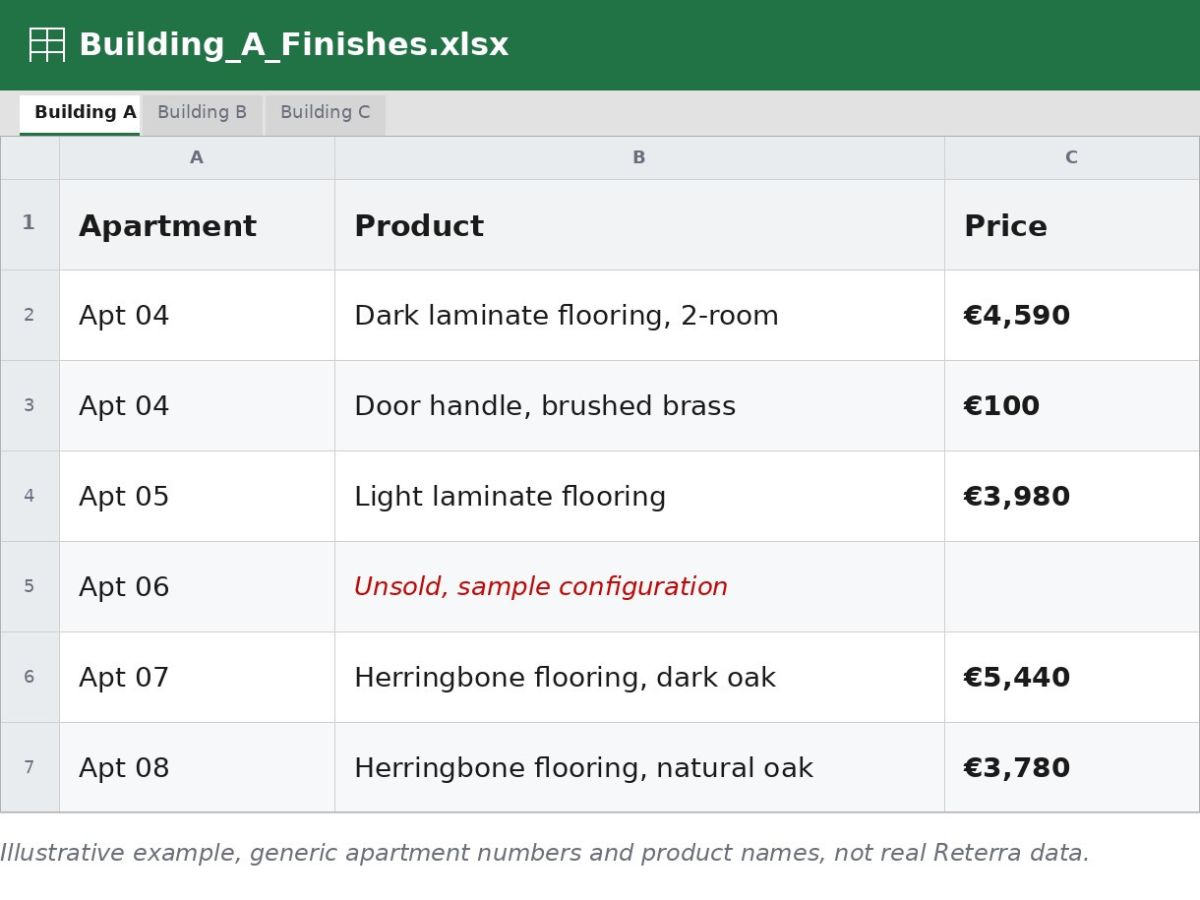
Lock an apartment and it can’t change by accident. One click turns every locked apartment into a builder Excel file with every material and quantity.
Results from Reterra, a real estate developer in Estonia. The full story is further down.
AI reads your drawings and sets up the project in hours. Buyers make their choices. Your builder gets the exact materials for every apartment, and nobody retypes a thing.
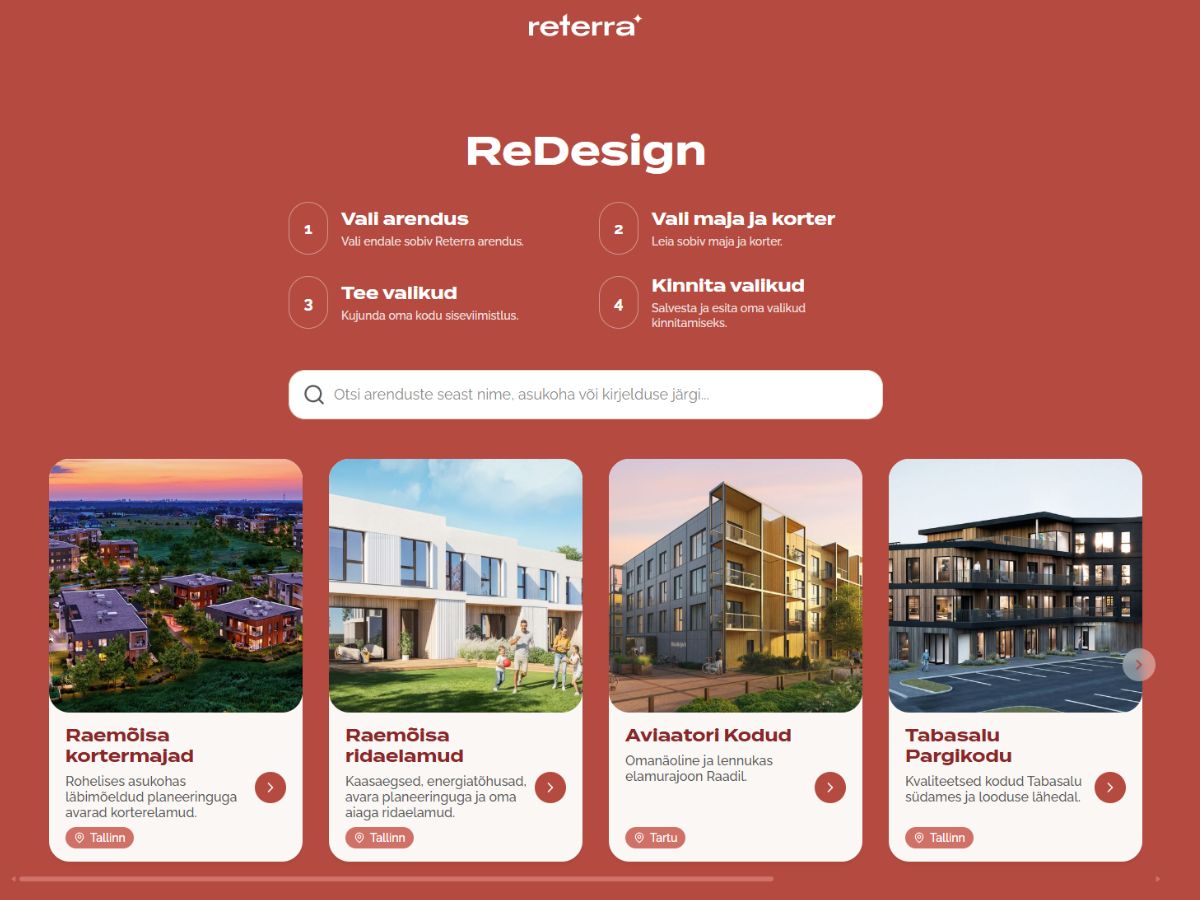
Reterra managed homebuyers’ finishing choices in Excel and a WordPress tool where every change went through external partners. Reterra ReDesign, built on Wabric, gives buyers real-time visual choices and generates builders’ data automatically, saving an estimated €60,000 a year.
You scrolled all the way to the bottom.

An apartment configurator is software that lets homebuyers choose their apartment’s finishes online, room by room, with a live price. The developer decides what can be chosen and at what price. Every confirmed choice goes to the builder as a material list, so nothing is copied by hand.
Yes, mostly. They’re three names for the same idea: buyers make their material selections and upgrades online, with live prices. "Home configurator" sometimes also covers houses and layout changes. An apartment configurator focuses on finishing choices across many apartments in one development.
Hours, not weeks. When you add a new project to Wabric, AI reads the drawings and builds the structure: buildings, floors, apartments and rooms. A person on your team or ours does the final fine-tuning. You don’t pay anyone to enter every apartment by hand.
Yes. Your team adds products, changes prices and updates rules in the Wabric back office, and changes go live right away. Reterra’s team does this themselves today. Before Wabric, every change went through an outside process and took days, if not weeks.
Yes. Each choice is layered onto images of the room itself, so buyers see their kitchen or bathroom, not a video game version of it. It stays fast and sharp on phones too, which matters because many buyers make their choices on the sofa, not at a desk.
When a buyer’s configuration is locked, Wabric saves a record of every product, quantity and price. One click exports all locked apartments into a builder Excel file, building by building, with apartments as rows. Reterra used to have one person doing this by hand.
Yes. The configurator runs under your name and look. Reterra’s runs as "Reterra ReDesign," and buyers never see the Wabric name. You can try it at redesign.reterra.ee. It’s in Estonian, but the flow is easy to follow.
Both cover the buyer’s journey from sale to handover. The difference is speed and control. In Wabric, AI reads your drawings and sets up a new project in hours. Your team runs the product catalog, prices and rules in one back office, without waiting on anyone. Buyers see every choice on images of the real room, under your own brand. And Wenture’s own developers build what you need next.
No. Wabric is built for anything configurable. Manufacturers use it for railings, garage doors, pipes and prefab rooms. Wallenium, for example, lets customers design their own focus room in 3D. For developers, the same engine handles apartments, from the whole development down to a single tap.