What is blocking export growth for manufacturers?
When a manufacturer of complex, configurable building products such as windows, doors, roof profiles and facade elements processes 10,000 orders a month, even a modest 4% manual entry error rate means roughly 400 defective orders every month.
Counting the indirect costs of reputational damage, broken customer relationships and lost revenue, that figure often exceeds 600,000 euros a year across the supply chain. This is a structural business problem that grows exponentially sharper as you expand into export markets, and one that individual tools cannot solve. It takes a complete sales machine that carries the customer from the first interest signal to a flawless order and from there straight into production.
Export is a long game, not a sprint. The experience of Estonia's leading window and door manufacturers, such as Lasita Aken and Viking Window, shows that entering foreign markets means mastering local standards and certifications like PEFC and FSC, and selling tailored solutions rather than cheap volume.
Most manufacturers do this through networks of local dealers, and that is exactly where the friction lives: the factory's strength is line optimization and volume efficiency, the dealer's value is local marketing, relationships and cultural fit, and when product data, price lists and technical constraints are fragmented between them, quote cycles slow down, errors multiply and the customer experience suffers.
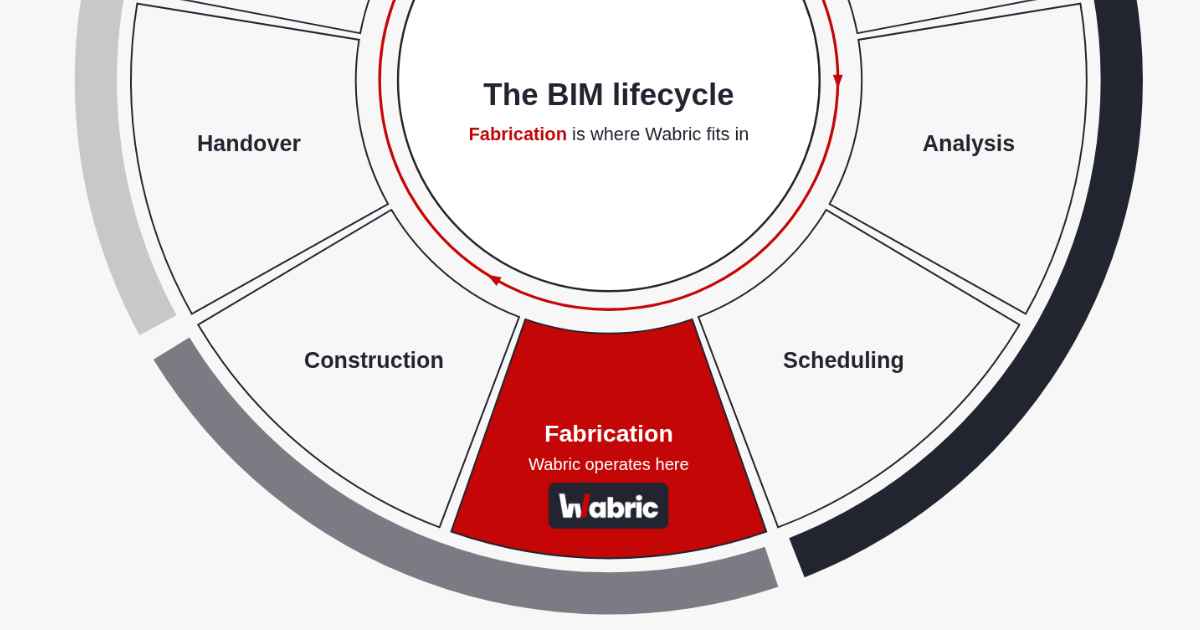
Wenture's goal is to turn this complexity into the manufacturer's competitive advantage. What makes it possible is Wabric, a sales machine that carries the customer from the first interest signal to purchase and automatically sends the production data and drawings straight to the factory.
The value promise is simple: the right product, at the right time, in the right place, without errors or mistakes.
Wenture's business analysis experience ensures the platform adapts precisely to the manufacturer's processes and target markets, but the measurable business value, speed, accuracy and scalability, is created by the product itself. The analysis below explains why this architecture has become a precondition of competitiveness for exporting manufacturers.
What is vertical sales integration, and why does B2B need it?
By vertical sales we mean a model where the manufacturer is not merely a passive supplier of products but extends its technical and commercial logic, the rules, constraints and pricing, digitally into the tools of dealers and end customers.
Unlike industry-vertical selling, this means vertically integrating the sales logic from the factory all the way to the end customer's interface. Research from leading consultancies confirms that the need for this kind of integration is growing fast in B2B.
The rapid transformation of B2B buying behavior
According to McKinsey's 2024 B2B Pulse survey, the share of in-person sales in company revenue dropped from 22% to 17% in a single year. Buyer preferences follow a rule of thirds: at every stage of the buying journey, roughly one third of buyers prefer meeting a sales rep, one third prefer remote contact and one third prefer digital self-service.
E-commerce has become the most productive sales channel, generating around 34% of company revenue today.
High-value digital transactions are the new normal
B2B buyers' trust in digital channels has grown at scale. McKinsey data shows 73% of buyers are willing to make single transactions above $50,000; 39% are willing to order over $500,000 through self-service or remote channels (up from 28% two years earlier), and about one fifth are ready to place orders above $1 million digitally.
Manufacturers therefore need to give partners tools that let them complete large transactions flawlessly and in real time.
Channel proliferation and data fragmentation
In 2016, the average B2B buyer used five channels to interact with suppliers; by 2024 that number had risen to 10.2 channels. Without a central, real-time synchronized data core (PIM/CPQ), product data and price lists drift apart across those channels, creating data loss and confusion.
More than half (54%) of B2B decision makers are willing to abandon a purchase or switch suppliers if the digital experience is poor. Today, 71% of B2B companies offer e-commerce.
Mass customization of complex products
The Engineer-to-Order (ETO) model, where products are built to customer specifications, increasingly dominates industrial manufacturing.
If product rules and constraints are not validated in real time directly in the dealer's interface, errors cascade through design, production and delivery.
Without PIM/CPQ integration, scaling product information across channels is practically impossible, directly threatening supply chain stability and brand reputation.
What does manual order entry actually cost?
Many manufacturing companies still rely on manual data entry and Excel-based spreadsheets, which block scaling and cause significant financial damage.
Research from the University of Hawaii found that roughly 88% of business spreadsheets contain errors, with formula cell error rates of 1 to 2%. Across supply chain operations, manual data entry error rates average up to 4%.
In B2B manufacturing and wholesale, these errors hit margins directly:
- Processing costs. Manual order processing and hand entry costs manufacturers an average of 15 to 35 euros per order, driven by labor cost and error resolution time.
- Correction and logistics costs. Fixing a configuration error after production has started costs 50 to 125% of the product's cost. Resolving a single delivery error costs 25 to 45 euros on average, and warehouse picking errors around 30 euros per incident.
- The cascade effect in the factory. When a dealer gets a dimension or technical compatibility wrong, the error travels into the factory's production plan and requires engineering intervention. Without automated configuration tools, up to 30% of quotes need manual review by an engineer.
For a manufacturer processing 10,000 transactions a month, a 4% error rate means 400 defective orders monthly. Even at a modest resolution cost of 50 euros, the company spends roughly 240,000 euros a year directly on avoidable mistakes.
Counting indirect costs such as reputational damage, broken customer relationships, lost revenue and penalties, the figure across the supply chain often exceeds 600,000 euros a year.
How does Wabric's architecture solve it?
Wabric solves these bottlenecks with a "multi-headed" architecture that connects centralized product information management (PIM) and dynamic product configuration (CPQ) to a distributed partner portal.
At its core is a single source of truth: all the technical logic needed for production, component compatibility rules, constraints (such as maximum glass dimensions under wind load) and base price lists live in the manufacturer's central data core, the Wabric Hub. It maintains a real-time, two-way connection with the manufacturer's ERP (SAP, Microsoft Dynamics, Odoo).
This central body feeds the dragon's heads: the configurators built for target markets and partners.
When an end customer or dealer makes a change in the interface, the following processes run in real time:
- Dynamic rule validation. The system checks the selected parameters against the factory's production rules, ruling out any situation where a customer orders a product the factory physically cannot build.
- Real-time bill of materials (BOM) calculation. The platform automatically creates an exact production recipe. Change a window's height and the profile length, glass square meters and fastener quantities are recalculated instantly.
- Automatic drawing generation. The system creates production-ready CAD and IFC files, removing the manual handover of data from sales to engineering and speeding up quote delivery by up to 60%.
Together, these processes form a complete sales machine: the customer's first interest signal in the configurator flows smoothly into a validated quote, an order and finally production-ready drawings, without a single manual retype. This unbroken path from signal to production is what creates measurable business value.
It is worth distinguishing 3 error types the architecture reduces through different mechanisms:
- data entry errors disappear with the API-based unbroken data flow (up to 95%);
- configuration errors are prevented by real-time rule validation (up to ~70%);
- general ordering errors fall through automated workflow (up to ~80%).
Since these measure different stages of the process, they are complementary figures, not contradictory ones.
Several industrial companies confirm the platform's effectiveness.
Metal industry company Saku Metall has used Wabric to simplify the sale of complex custom products by integrating product data with customer service. Flooring importer Floorin has made Wabric the backbone of its IT systems, and fastening solutions provider R-Fix has found in the platform a reliable self-service sales engine.
How do dealers get autonomy without the factory losing control?
Export market dealers differ in size, technical capability and brand strategy. The vertical model lets the manufacturer profile partners and offer each a suitable level of integration:
- Standard dealer. Uses the manufacturer's standard configurator with no custom code or design. Adaptation to the target market happens at the settings level (local currency, VAT rules), which allows new partners to be onboarded with minimal lead time.
- Strong own-brand partner (white-label). Large dealers want to keep control of customer relationships and brand identity. A white-label white-label setup provides a visually customized configurator interface that fits the partner's webshop. The end customer sees a familiar local brand, but the underlying logic, rule validation and order transmission run through Wabric's central engine straight to the manufacturer's factory.
- The partner portal offers a full self-service environment: partners manage projects end to end, see real-time material availability and lead times, and independently adjust local margins and discounts. Because everyone sees the same data, the endless email and phone loops disappear, and the approval cycle for complex projects shrinks from 2 weeks to 2 hours.
This supports an important balance between people and digital tools. Gartner research shows most B2B buyers want to review AI-generated quotes directly with a sales rep. McKinsey analysis points out that the most successful sales teams balance three things: speed, transparency and technical expertise. A self-service portal paired with real-time customer support gives partners exactly that transparency and speed.
How do you prevent channel conflict legally in the EU?
When a manufacturer sells both direct and through multiple dealers, channel conflict often follows. It shows up in three forms:
- Vertical conflict: the manufacturer competes directly with its own dealers, for example by offering the lowest prices in its own webshop. This damages dealers' incentive to promote the products.
- Horizontal conflict: dealers on the same market end up in price wars because they have access to an identical portfolio. This leads to price erosion and declining brand value.
- Multichannel conflict: different channels present inconsistent pricing, confusing the buyer.
An important legal constraint: under EU competition law, resale price maintenance (RPM) is treated as a hardcore restriction and is prohibited under the Vertical Block Exemption Regulation (VBER, Regulation 2022/720).
The manufacturer cannot legally fix or mandate a dealer's selling price. (The MAP concept known from the US context concerns the advertised price, not the actual selling price, and is treated with more nuance in the EU.)
Channel conflict therefore has to be prevented with technological and structural solutions, not price agreements.
Wabric solves this by letting the manufacturer centrally control product availability and rules while leaving dealers free to adjust margins locally.
The manufacturer can create unique product configurations or bundles for each market or partner. If partner A has access to a product version partner B does not carry, direct price comparison becomes impossible for the end consumer.
Partners can also use deal registration. When a dealer registers a specific construction project, it is locked for other partners and the manufacturer's direct sales team for a defined period, typically 30 to 90 days. This protects investments, motivates partners to develop projects and removes horizontal conflict.
What ROI can you expect from CPQ?
The economic benefit of integration can be assessed through a standard payback analysis. The return on investment (ROI) for CPQ and PIM software is calculated as:
ROI = (return on investment − investment cost) ÷ investment cost × 100
Below is a three-year financial projection for a mid-sized industrial company based on NetSuite and Salesforce benchmark studies.
*Since these are US-based benchmarks, the table amounts are in US dollars; the ROI percentage is currency-independent and illustrative.
Applying these numbers to the formula:
ROI = (2,955,000 − 375,000) ÷ 375,000 × 100 = 688%.
A payback rate like this comes primarily from the drastic shortening of quote preparation time and the disappearance of engineers' routine handwork.
McKinsey estimates that roughly 43% of configuration, pricing and quoting tasks are largely automatable with today's technology.
In practice, CPQ typically reduces quote errors by 20 to 35%, shortens the sales cycle by about a quarter and speeds up quote preparation by 30 to 40%, in individual cases by multiples.
One mid-sized manufacturer, for example, cut the preparation of a single quote from two working days to about 15 minutes while reducing errors by over 90%.
You can model your own numbers with the Wabric ROI calculator.
Where does Estonian industry stand on digitalization?
Industrial digitalization is gaining weight in Estonia and across Northern Europe. Estonia's per-capita investment in digitalization is among the highest in Europe, and the state supports companies' digital transformation through the Enterprise and Innovation Foundation (EIS) with digitalization masterclasses and roadmap grants.
Statistics Estonia's 2025 information technology survey shows steady growth in digitalization among Estonian companies:
- Around 49% of Estonian companies use data analytics in daily work, supporting data-driven decision making
- 22% of companies use at least one AI technology, up 8 percentage points in one year (14% in 2024)
- 61% of companies use paid cloud services, laying the foundation for real-time data exchange and SaaS platforms
Globally, the CPQ software market has already passed the $3 billion mark, around $3.2 to 3.5 billion in 2025, and is projected to grow to $8 to 11 billion over the next decade, with manufacturing as the largest end-user segment.
McKinsey research shows AI-driven operations integration can cut supply chain inventory by 20 to 30% and deliver measurable savings in logistics costs.
Conclusions and strategic recommendations
A vertical, multi-headed sales architecture solves industry's most critical problems: high error rates, slow quote cycles and channel conflict.
Wabric brings these together into one sales machine that carries the customer from the first interest signal to a flawless order and sends the data and drawings straight to production: the right product, at the right time, in the right place.
For manufacturing leaders planning to expand abroad or raise the efficiency of their dealer network, we recommend three guidelines:
- Centralize the data. Before entering new markets, consolidate all product data, technical constraints and price lists into a single product information system (PIM), eliminating Excel-based data loss.
- Profile your dealers. Offer partners flexible integration options from a standard configurator to a white-label solution, ensuring local autonomy while protecting the manufacturer's intellectual property.
- Integrate the systems. Ensure an unbroken data flow from the configurator straight into the factory's ERP, eliminating manual retyping of orders and the production errors it causes.
The digital shift in industry is no longer a future trend but a precondition for staying globally competitive.
Estonia's traditional strength, cheap labor, is disappearing; the new competitive edge has to come from the product, from innovation and from faster delivery.
Digital investment is the fertilizer of that future productivity. With a properly mapped and implemented platform, manufacturers can achieve hyperscalability while keeping full control over product quality, brand and margins.
Want to see how this would work with your products? Book a demo and we will walk you through the platform on real manufacturing use cases.
About the author
Kaur Tull is CEO of Wabric and a certified civil engineer (Estonian Qualification Framework, level 7) with a background in BIM coordination and modelling.
Sources: McKinsey 2024 B2B Pulse Survey; McKinsey operations and supply chain analyses; CPQ market research (2025 market size); Salesforce CPQ; NetSuite; spreadsheet error research (R. Panko, University of Hawaii); Statistics Estonia, information technology survey 2025; Regulation (EU) 2022/720 on EUR-Lex. ROI examples are based on US benchmark studies and are illustrative.
Frequently Asked Questions
Manual data entry error rates in supply chain operations average up to 4%. University of Hawaii research found roughly 88% of business spreadsheets contain errors, with 1 to 2% of formula cells affected.
An error caught after production starts typically costs 50 to 125% of the product's cost. Manual order processing alone costs 15 to 35 euros per order before any errors occur.
Wabric's architecture cuts data entry errors by up to 95% through the unbroken API-based data flow, configuration errors by up to about 70% through real-time rule validation, and general ordering errors by up to about 80% through automated workflow. These measure different stages of the process, so the figures are complementary, not overlapping.
E-commerce is now the most productive B2B sales channel, generating around 34% of company revenue, and 71% of B2B companies now offer e-commerce, per McKinsey's 2024 B2B Pulse survey.
McKinsey data shows 73% of B2B buyers will complete single transactions above $50,000 through digital or remote channels, 39% will go above $500,000, and about one in five will place orders above $1 million digitally.
A standard dealer uses the manufacturer's configurator as is, with only local settings like currency and VAT adjusted. A white-label partner gets a visually rebranded configurator that fits their own webshop, while rule validation and order routing to the factory still run through the central system underneath.
No. Resale price maintenance is a hardcore restriction under EU Regulation 2022/720. Channel conflict must be managed structurally, through assortment control and deal registration, not price agreements.
When a dealer registers a specific project, it's locked for other partners and the manufacturer's direct sales team for a defined period, typically 30 to 90 days. This protects the dealer's investment in developing the project and removes horizontal price competition on it.
Using standard payback analysis, a mid-sized industrial company can see ROI around 688% over three years, based on NetSuite and Salesforce benchmark studies. In practice, CPQ typically cuts quote errors by 20 to 35%, shortens the sales cycle by about a quarter, and speeds up quote preparation by 30 to 40%.
A webshop sells fixed SKUs. A CPQ validates every parameter change against factory production rules in real time and generates the price, bill of materials and production drawings from the same configuration.
Estonia has among the highest per-capita digitalization investment in Europe. Per Statistics Estonia's 2025 ICT survey, 49% of Estonian companies use data analytics, 22% use at least one AI technology, and 61% use paid cloud services.