See how Wabric solves this
30 minutes with someone who understands complex product manufacturing. No pressure, no script.
Talk with Sales →Short answer: A product configurator pays back when it goes past the quote and produces the bill of materials, the manufacturing files and the structured hand-off to ERP. Configurators that stop at a lead are marketing tools. Evaluate on the data layer underneath the 3D view, not the 3D view itself.
Key takeaways
- Two very different tools get called "configurator": a visualiser that captures leads, and a sales-to-production system that carries a configuration to the factory.
- The 3D front-end is the easy part. Structured product data, encoded engineering rules and ERP integration decide whether the project returns anything.
- B2B buyers now define most of their requirements before they contact sales, but they still want a human for complex, high-value purchases. The configurator's job is to own the early self-directed evaluation, then hand a clean configuration to a salesperson.
- "Our product is too complex to configure" is almost always an effort problem, not an impossibility problem.
- Ask for a scoped, paid proof of concept on one of your real products before you commit to a licence.
Why do configurator projects stall?
Most manufacturers who sell custom-configured products have seen a configurator demo. Many have seen a dozen. The tools look impressive: rotate the 3D model, change a colour, watch the price update live. Salespeople love them on sight.
And yet a striking number of these projects never happen. The demos pile up over two or three years, everyone agrees it looks good, and nothing gets bought. The reason is almost never the technology. It's that nobody could clearly answer a simple question: what is this actually worth to us, and how does it change the work we do every day?
That stall is happening at exactly the wrong moment, though the shift is more nuanced than "buyers want to buy online now."
What has changed in B2B buying
The way buyers evaluate has changed. McKinsey's B2B Pulse research shows that most B2B buyers define their needs before ever talking to sales, and prefer digital self-service for early evaluation. Gartner similarly finds that 67% of B2B buyers favour a rep-free experience when they are searching and learning early in a purchase.
But the same research is clear that this does not mean humans disappear from the deal. Gartner predicts that by 2030 the majority of B2B buyers will prefer sales experiences that keep human interaction central for complex, high-stakes purchases, and that fully self-service buying carries a higher risk of purchase regret when the product is complicated. For a custom façade, a large-diameter pipe system or a turnkey house, that caveat matters a great deal. Nobody clicks "buy" on a six-figure engineered product without talking to a person.
This is exactly why the configurator's job is not to replace the salesperson. Its job is to own the early, self-directed evaluation the buyer now insists on doing alone, then hand a clean, complete, structured configuration to a salesperson for the parts that need a human: the complex trade-offs, the negotiation, the trust.
Sitting the shift out doesn't keep things stable. It just means the buyer does that early evaluation on someone else's website and forms a preference before your sales team ever hears from them.
What is a product configurator?
A product configurator is a tool that lets someone (a customer, a partner or your own salesperson) assemble a valid version of your product by making choices: dimensions, materials, options, accessories. As choices are made, the tool enforces your engineering rules so that only buildable combinations are allowed, and it calculates the outcome: a price, a drawing, a bill of materials.
That last part is where the confusion starts. The word "configurator" gets applied to two very different things.
Visualiser vs sales-to-production configurator
The first is a visualiser. It shows a nice 3D picture, captures a lead, and hands a sales team an inquiry to follow up. It's essentially a marketing tool with a rendering engine. Useful, but shallow. It stops at "customer is interested."
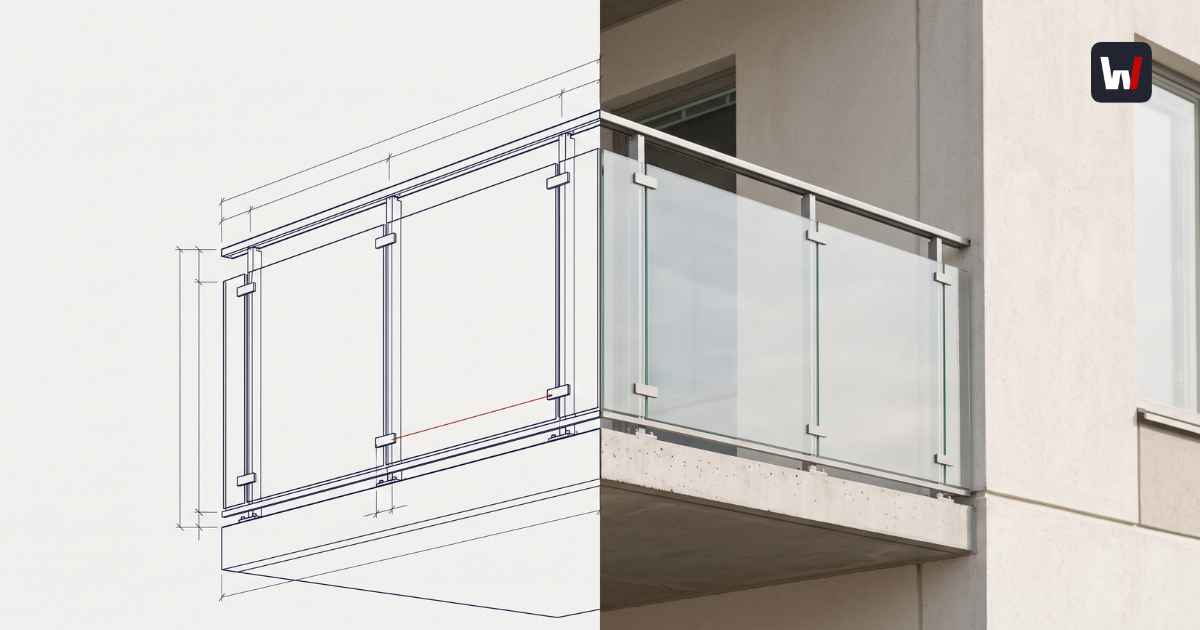
The second is a sales-to-production system. It also shows the picture, but underneath it generates the exact bill of materials, produces manufacturing-ready drawings (DXF, IFC, STEP, PDF), applies one consistent pricing logic, and passes structured data straight into your ERP so the order can go to production without anyone re-keying it. It doesn't stop at "interested." It carries the configuration all the way to the factory floor.
Both get called "configurators." They are not the same purchase, and confusing the two is the single biggest reason evaluations go wrong.
Why the pretty picture is the least important part
Here is the counterintuitive truth: the visual front-end is the easy part, and it's the part that matters least to your return on the investment.
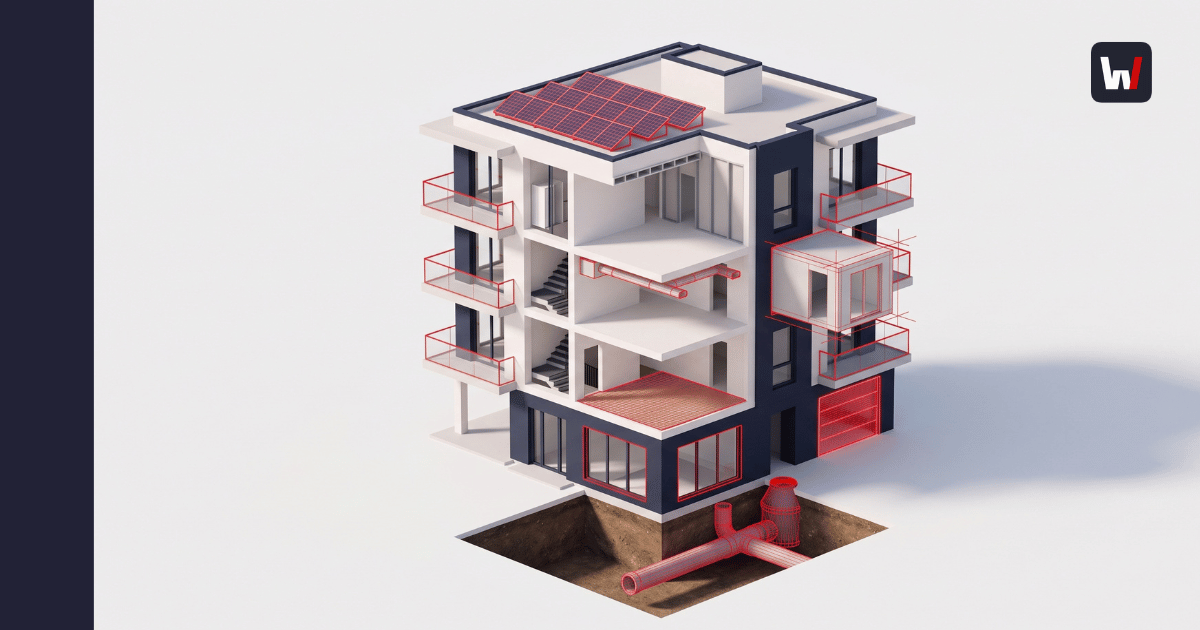
What determines whether a configurator pays back is the layer underneath it: the product data, the rules and the connections to your other systems. A configurator is only as good as the structured product information feeding it. If your product isn't modelled as a proper product, with a clear structure, a bill of materials and rules for how parts fit together, then a slick front-end just puts a beautiful face on chaos.
This is why the manufacturers who succeed with configurators spend most of their effort before the configurator, getting their product structure right: defining the models, the bill of materials for each, and the constraints that govern how a valid product goes together. That work lives in a PIM, not in the 3D view. It's less glamorous. It's also the whole game.
When people say a configurator "didn't deliver value," this is usually why. The demo dazzled, the foundation was never built, and the tool had nothing solid to stand on.
What does configurator ROI look like?
Value from a real sales-to-production configurator shows up in a few concrete places. It helps to look at what's been measured rather than what's promised in a demo.
Sales cycle speed
When a salesperson can produce a complete, accurate quote themselves instead of routing every request through an engineer, the whole cycle compresses. Aberdeen's research on CPQ adopters found they spent 27% less time producing a quote or proposal. That's an industry average.
The ceiling is much higher: one manufacturer, Saku Metall, saw its cycle for configurable products drop from around two weeks to about two hours after going live, with roughly 90% of orders in that line now coming through the configurator directly.
Freeing the engineering bottleneck
In most custom-product businesses, an engineer gets pulled into every quote to produce drawings or check feasibility. That's expensive, it's slow, and it means your most valuable technical people spend their time on repetitive sales support instead of the genuinely hard, one-off problems only they can solve.
A configurator that encodes the rules lets sales handle the standard cases safely, and hands engineers clean, complete data for the exceptions.
Reaching customers you couldn't serve before
A configurator that's properly marketed becomes a channel, not just a tool. One manufacturer went live and won a large export order from another country within roughly a month of launch. A deal that simply wouldn't have surfaced through the old email-and-phone process.
Consistency and error reduction
When every quote runs through the same rule set and the same pricing logic, you stop getting the situation where the same product costs different amounts depending on who quoted it, and you stop sending out configurations that can't actually be built. Fewer erroneous quotes means fewer deals lost to a mistake and less rework once an order reaches production.
A caveat worth stating plainly, because it's true: a configurator hidden on a website that nobody markets will deliver none of this. The tool amplifies a good product, a good site, and active marketing. It does not replace them.
"Our product is too complex to configure"
The most common reason manufacturers talk themselves out of a configurator is complexity. "Our product has too many dependencies. The parts interact in too many ways. You can't automate that without clear rules, and our rules live in people's heads."
The first half of that is a real constraint. You genuinely cannot configure a complex product without clear rules, and if those rules only exist as tribal knowledge, that's work you'll have to do regardless of which vendor you pick.
The second half, "it's too complex to automate," is almost always false. A single configurable product can easily contain billions of valid combinations, and parametric systems handle that routinely: change one dimension and everything dependent on it recalculates against the rules without breaking. The challenge isn't the number of combinations. It's capturing the engineering logic accurately in the first place. That's an effort question, not an impossibility question.
The practical implication: when you evaluate a vendor, probe hard on how they handle rules and constraints, and whether they understand your product's engineering, not just how the front-end looks.
Five questions that get you out of the demo loop
If you've been stuck grading 3D views, change what you're evaluating.
1. Does it go all the way to production, or does it stop at the lead? Ask what comes out the far end. If the answer is "a nicely formatted inquiry," it's a visualiser. If it's a bill of materials, manufacturing-ready files, and a structured hand-off to your ERP, it's a sales-to-production system. Know which one you're buying.
2. Can it output the file formats your factory actually uses? DXF, IFC, STEP, PDF. The configuration is only valuable if it produces data your manufacturing and your customers' architects can use directly.
3. How are the rules maintained, and who can change them? Rules that only the vendor can edit make you dependent forever. Understand where the product logic lives and how it's updated as your range evolves. This is one of the sharpest differences between rules-engine CPQ platforms and parametric ones.
4. Does the vendor understand your product, or only their software? This is the one that separates outcomes. A team that grasps the engineering behind your product will model it correctly. A team that only knows software will build you a beautiful shell over rules they don't understand.
5. Will they run a scoped proof of concept before you commit? The fastest way out of the demo loop is to see the tool working on one of your real products, with your rules, producing a real quote. It won't be free, because building it takes genuine engineering effort, but a paid proof of concept with no licensing commitment is the cleanest way to find out whether the approach works for you before you bet the project on it.
The bottom line
Configurator projects don't stall because the technology fails. They stall because the value was never made concrete, the data foundation was never built, and the buyer was grading the wrong thing.
The manufacturers who get real return treat the configurator as the visible tip of a larger system: structured product data, encoded engineering rules, and a clean path from a customer's choice all the way to the factory. Get that foundation right and the results are measurable. Sales cycles in hours instead of weeks, engineers freed for real engineering, and orders arriving through a channel that didn't exist before.
The 3D view is what sells the demo. Everything underneath it is what pays it back.
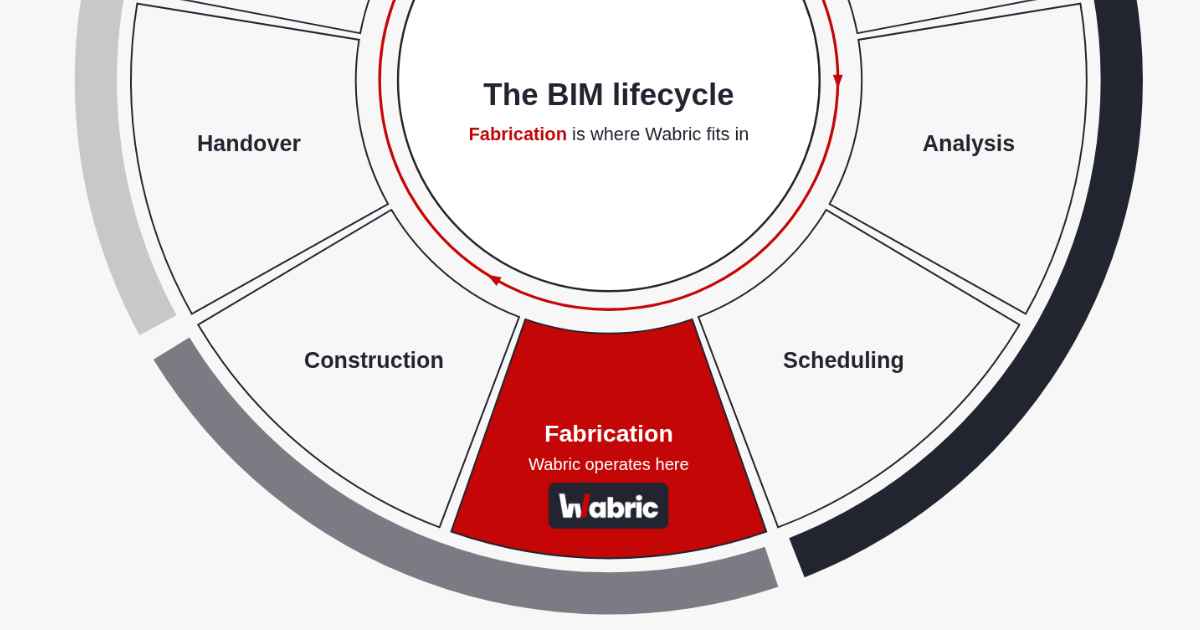
Wabric is a CPQ and PIM platform for manufacturers of complex engineered products, from the customer's first configuration to production-ready drawings and ERP hand-off. If you want to see how it would handle one of your real products, talk with our team.
Sources
- Gartner, Sales Survey Finds 67% of B2B Buyers Prefer a Rep-Free Experience (2026)
- Gartner, By 2030, 75% of B2B Buyers Will Prefer Sales Experiences that Prioritize Human Interaction Over AI (2025)
- McKinsey B2B Pulse research (2024), on buyers defining needs and preferring digital self-service before contacting sales
- Aberdeen, Configure-Price-Quote: Best-in-Class Deployments that Speed the Sale, on quote-creation time reduction
Frequently Asked Questions
A product configurator handles the "configure" step: valid option selection under engineering rules. CPQ adds pricing and quoting on top. A sales-to-production platform adds the fourth step, produce: bill of materials, manufacturing files and an ERP-ready order from the same configuration.
Not because of the software. They fail because the product was never structured as data, the engineering rules were never written down, and nobody defined what a successful outcome would look like in hours saved or quotes shipped.
A defined product structure, a bill of materials per model, and the constraints that govern which combinations are valid. If that logic only exists in the heads of two senior engineers, capturing it is the first project, not the second.
At minimum DXF for sheet metal and CNC, STEP for 3D exchange, IFC for BIM coordination, and PDF for human-readable documentation. If your customers include architects, IFC isn't optional.
Yes. Parametric systems recalculate dependent values against the rule set whenever one input changes, so the combination count isn't the limiting factor. Capturing the engineering logic accurately is.
No. It removes the repetitive quoting work and gives the buyer the self-directed evaluation they want early. Salespeople stay in the deal for the trade-offs, the negotiation and the relationship, which is where complex purchases are won.
Quote cycle time before and after, engineering hours spent on sales support, error and rework rate on incoming orders, share of orders arriving through self-service, and quote volume per salesperson. Baseline all five before you start or you won't be able to prove anything afterwards.