Key takeaways
- A digital twin in manufacturing is a digital copy of a real product, machine, line, or process that stays linked to it through data.
- There are 4 main types by scale: component, asset (or product), system, and process twins.
- Reported gains are big, but most come from surveys and vendor research: McKinsey estimates up to 50% faster time to market, and companies in Hexagon's survey reported 19% lower costs.
- For build-to-order manufacturers, the first twin that pays off is often the configured product twin: one model that produces the price, the bill of materials, the production drawings, and an instant 3D view for the client.
- Start small: pick one costly, measurable problem, prove the twin on one machine, line, or product family, and scale what works.
What is a digital twin in manufacturing?
A digital twin in manufacturing is a digital copy of a real product, machine, production line, or process. It is built from real data and stays linked to the real thing, so you can see what is happening, test changes safely, and decide before you build, buy, or fix anything.
2 quick examples:
- A machine twin. A twin of a CNC machine shows its temperature and vibration live and warns you before a part wears out.
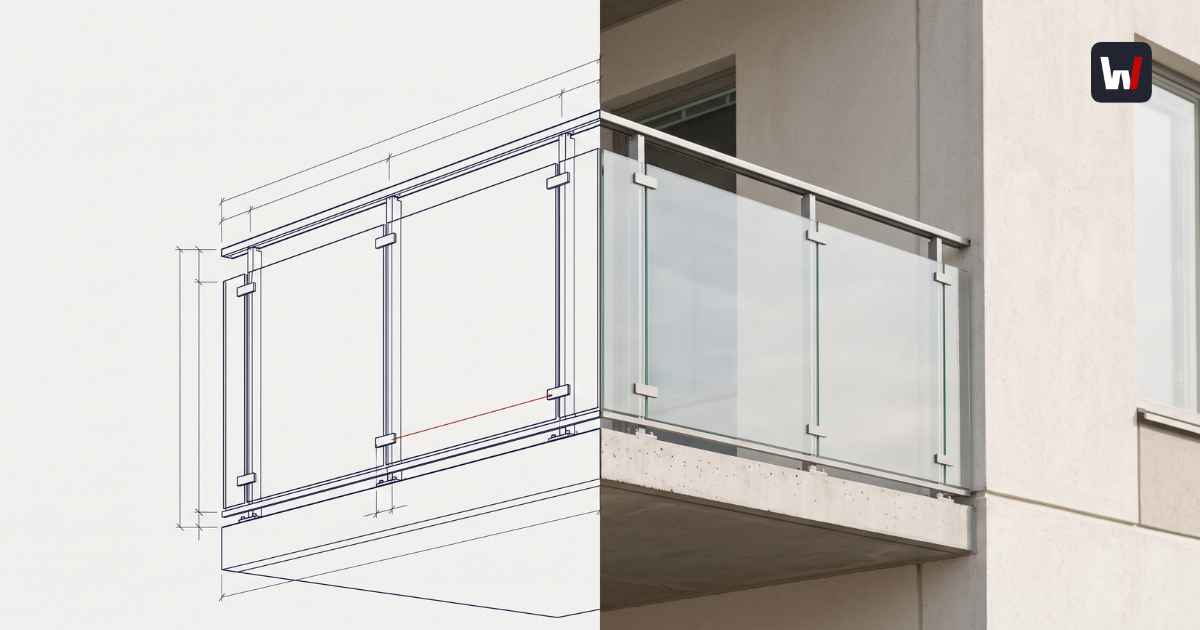
- A product twin. A twin of a balcony railing knows its length, glass type, and post spacing. Change the length, and the price, parts list, and drawing change with it.
Most guides on this topic stop at the factory. This one also covers the twin that exists before production starts: the product your customer configures when they ask for a quote.
What makes something a digital twin?
Every digital twin has 3 parts:
- The real thing. A product, a machine, a production line, or a whole factory.
- The digital model. Its geometry, rules, and behavior, in software.
- The link between them. Data flows from the real thing to the model (for example, sensor readings), and decisions flow back (new settings, a drawing, an order).
The link is what separates a twin from a plain 3D model. A 3D model shows what something looks like. A simulation tests a scenario once. A digital twin is tied to one specific real thing and stays in sync with it.
Where the idea came from
Michael Grieves introduced the concept in 2002 as a model for product lifecycle management (PLM). NASA researcher John Vickers suggested the name "digital twin" in 2010 (VentureBeat interview with Michael Grieves).
Grieves sorts twins by where they sit in a product's life: a twin built before the product exists, a Digital Twin Instance for each real unit, and a Digital Twin Aggregate that pools data from all instances. His key point: "My perspective is that the digital twin precedes the physical one." The twin can come first, and the product is built from it.
How does a digital twin work?
A digital twin works as a loop. Data comes in from the real thing, the twin updates and tests scenarios, and people or machines act on what it shows. Then the loop repeats (IBM).

The tools behind the loop are familiar: sensors and machine data, business systems like ERP and CAD, a 3D or data model, and more and more often AI to spot patterns. For a configured product twin, the loop starts at step 3: the twin exists first, and the real product is built from it.
What are the types of digital twins in manufacturing?
There are 4 main types, sorted by scale (IBM). Many factories that use twins run more than one.
- Component twin. One part, such as a motor, a valve, or a bearing.
- Asset twin (also called a product twin). A complete unit made of several parts, such as a pump, a gearbox, or a garage door.
- System twin. Several assets working together, such as a production line or a robot cell.
- Process twin. The whole flow, such as a factory, a supply chain, or the path from order to delivery.
McKinsey uses a different split: product, asset, factory, and end-to-end twins (McKinsey). The idea is the same: each level zooms out further.
The type most lists miss: the configured product twin
A configured product twin is a product twin created the moment a customer configures an order, before anything is built. It holds the exact dimensions, materials, and rules for that one order.
For manufacturers who build to order, this is often the first twin that matters. Every order is different, so there is no finished product to copy. The twin has to come first, just as Grieves described. More on this below.
Digital twin vs simulation, 3D model, digital thread, and DPP
These 6 terms get mixed up a lot. Here is the short version of each.
Digital twin vs simulation
A simulation tests a scenario in a purely virtual world, with no live link to a real system. A digital twin mirrors one real thing and can send results back to it. Many twins run simulations, but a simulation alone is not a twin (IBM).
Digital twin vs digital shadow
A digital shadow reads live data from the real thing but can't send anything back. It only listens. A digital twin works in both directions: it receives data and sends settings, alerts, or instructions back.
Digital twin vs 3D model
A 3D model shows what something looks like at one point in time. It can't tell you how the thing behaves or what condition it is in today. 3D models are often the base layer of a twin, but a model alone is not one.
Digital twin vs digital thread
A digital thread connects data across departments and systems, from design to sales to service. A digital twin models one asset, product, or process. Think of the thread as the wiring and the twins as the things it connects.
Digital twin vs Digital Product Passport (DPP)
A Digital Product Passport is a structured data record about a product, such as its materials, origin, and repair and recycling details, linked to the product through a data carrier like a QR code. The EU is rolling it out product group by product group from 2027. A passport needs no 3D model or live sensor data. But if each product you sell already has a clean data twin, most of the passport's content already exists.
What are the benefits of digital twins in manufacturing?
The 5 main benefits are fewer errors before production, less downtime, faster decisions, better traceability, and better sustainability data. Here is what the research says:
- How common they are. In a 2022 McKinsey survey of 75 senior industrial leaders, 86% said a digital twin applies to their business, 44% had already implemented one, and 15% were planning to (McKinsey).
- What they can deliver. McKinsey estimates, based on companies already using them, that digital twins can lift revenue by up to 10%, cut time to market by up to 50%, and improve product quality by up to 25% (McKinsey).
- What users report. Hexagon surveyed 660 executives across 11 industries. Companies using digital twins reported cutting costs by 19% and growing revenue by 19%, and small and mid-sized companies reported a higher average return than large ones (Hexagon). Keep in mind that Hexagon sells digital twin software.
In plain words, a digital twin helps you:
- Catch mistakes before they cost money. You test a design, a layout, or a change virtually, not with steel and glass.
- Fix machines before they break. Live data shows wear early, so maintenance happens on your schedule.
- Decide faster as a team. Sales, engineering, and finance look at the same model. At one carmaker, a configurator built on a digital twin cut the time to agree on changes by 20% (McKinsey).
- Trace every product. When each unit has its own record, you can follow a quality problem back to its source. An automotive supplier that did this cut scrap by 20% (same McKinsey source).
- Report sustainability with real data. In Hexagon's survey, 38% of respondents cut emissions substantially, by 15% on average.
Digital twin examples in manufacturing
Here are 4 real examples, from a global carmaker down to a ventilation manufacturer.
BMW Group: a twin of every plant (process twin)
BMW has digital twins of its more than 30 production sites, built on NVIDIA Omniverse. Before a new model launches, the twin checks that the car body moves through every station without hitting anything. That check now takes 3 days of simulation instead of almost 4 weeks of real testing, and BMW expects production planning costs to drop by up to 30% (BMW Group, June 2025).
Unilever: twins that run part of the line (system twin)
Unilever connected factory machines to a digital twin on Microsoft Azure, streaming data such as temperatures and cycle times. The twin took over moisture control on a soap-making machine, and it works out the fastest order of steps for liquid batches like shampoo. By 2019, Unilever ran 8 factory twins across 4 continents (Microsoft).
A turbine maker: a million designs in seconds (product twin)
A renewable-energy company used a digital twin with machine learning to rate more than 1 million hydroelectric turbine designs in seconds. Its end-to-end design cycle time was cut in half (McKinsey).
ETS Nord: ventilation twins for sales (product data twin)
ETS Nord makes a wide range of ventilation silencers, which made picking the right one slow. With SilencerIQ, built on Wabric's PIM, sales engineers enter parameters like room volume and noise frequency, get the right silencer and its noise attenuation on the spot, and send complete project offers with drawings and graphs (ETS Nord customer story).
For build-to-order manufacturers, the twin starts at the quote
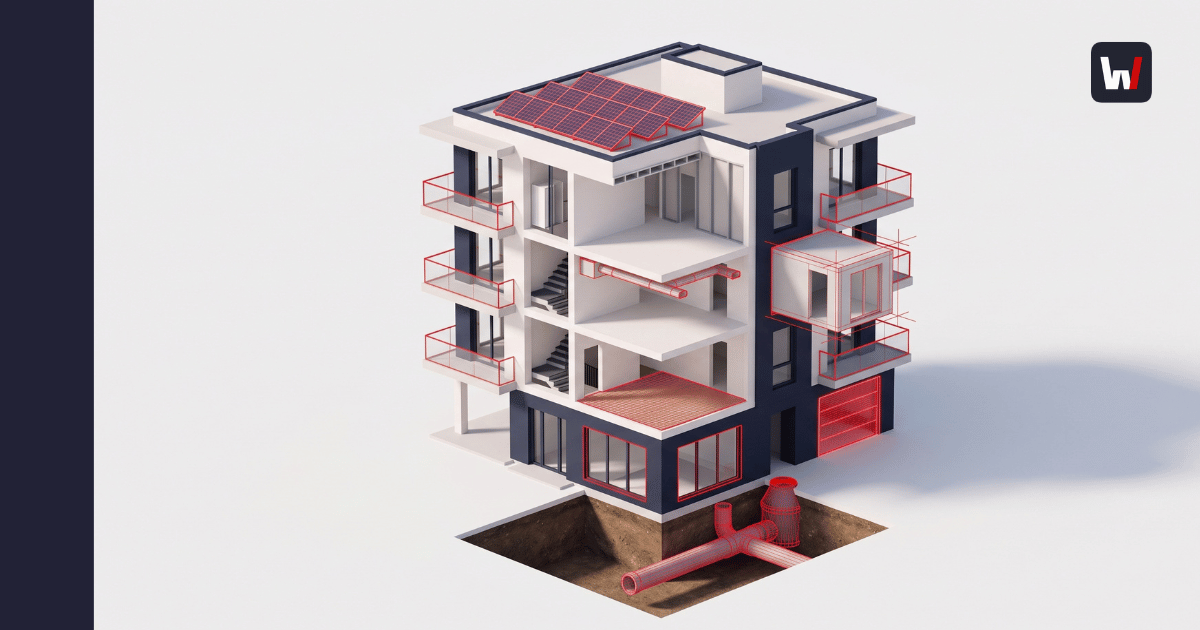
If you build to order, every quote describes a product that doesn't exist yet. Railings, pipes, doors, modular rooms, ventilation: no 2 orders are quite the same, so there is no finished product to copy.
That's why the same product often gets defined 3 times. Sales prices it in a spreadsheet. After the customer says yes, engineering redraws it in CAD. Then someone retypes the data for the ERP, the architect, or the authorities. At Innore, a balcony railing maker, sales engineers spent about half their time turning emailed drawings into quotes (Innore customer story).
A configured product twin removes the retyping. The customer, your sales team, or a partner configures the product in a browser, on a parametric 3D model with real engineering rules. When the order is confirmed, that one model produces everything the next people need.

Change the configuration, and all 4 outputs change with it.
This is how Wabric works. Wabric is a CPQ and PIM platform for manufacturers of complex, engineered products. Every configuration generates the price, the bill of materials, production drawings, and an instant 3D view from the same model.
The 3D view matters more than it looks: your customer sees exactly what they are ordering before they say yes.
What it looks like in practice
- Innore (balcony railings): 80 hours of sales time saved per month and 50% of manual quoting gone. Orders flow straight into the ERP (story).
- R-Fix (glass railings): 60% faster quoting and 80% less manual data entry, with live ERP pricing (story).
- Saku Metall (garage doors): sales cycle cut from 2 weeks to 2 hours, with 90-95% self-service (story).
- Wallenium (modular focus rooms): custom-size rooms quoted in real time, with an instant order PDF showing 3D snapshots (story).
Want to see your own product as a configured twin? Book a demo, and we'll look at what you sell and which modules fit.
How to start with a digital twin (without a huge budget)
You don't need a full factory twin on day one. Start where money leaks today, prove the result small, then grow. McKinsey gives the same advice: be clear about the business case, prototype first, then scale (McKinsey).
- Pick one painful, measurable problem. Unplanned downtime on one machine. Slow quotes. Quote errors that turn into rework. Write down today's number.
- Pick the twin that fits the problem. Downtime needs a machine twin. Layout or throughput needs a process twin. Slow or wrong quotes on custom products need a configured product twin, usually through CPQ software for manufacturing.
- Get the data in order. A twin is only as good as its data. For a product twin, that means one source of truth for parts, rules, and prices, not 5 spreadsheets.
- Build a small version first. One machine, one line, or one product family. Prove the number moves.
- Connect it to the systems you already use. ERP, CRM, and CAD. A twin nobody opens is just a nice 3D picture.
- Scale what works. Add product families, lines, or sites once the first one pays off.
Common mistakes
- Starting with the technology, not the problem. "We need a digital twin" is not a business case.
- Building a 3D model with no data link. If it doesn't stay in sync with the real thing, it isn't a twin.
- Ignoring the people. Grieves sees culture as a bigger barrier than computing power, because some managers only trust what they can touch (VentureBeat).
- Copying an enterprise playbook. You don't need BMW's budget. In Hexagon's survey, smaller companies reported higher average returns than large ones.
Summary
A digital twin is a digital copy of a real product, machine, line, or process that stays linked to the real thing. Factory twins get most of the attention, and their results are real: BMW turned almost 4 weeks of collision testing into 3 days. For manufacturers who build to order, though, the first twin that pays off is often the configured product twin, created when the customer configures the order. One model then gives sales the price, production the drawings, your customer an instant 3D view, and the Digital Product Passport its data. Start with one measurable problem, prove it small, and scale what works.
See what a configured product twin looks like for your products. Book a demo to talk through what you sell and which Wabric modules fit.
Frequently Asked Questions
BMW Group runs digital twins of its more than 30 plants. Before a new model launches, the twin checks that the car body moves through every station without collisions. That now takes 3 days instead of almost 4 weeks of physical testing.
Component twins (one part), asset or product twins (a full unit), system twins (several assets working together), and process twins (a whole factory or flow). Many manufacturers run several types at once.
No. A 3D model shows what something looks like. It becomes part of a digital twin only when it is linked to one specific real product, machine, or process and kept in sync with it.
There is no standard price, because scope drives cost. A twin of one machine or one product family is a much smaller project than a twin of a whole factory, which is why most companies start small and expand.
McKinsey puts a factory twin build at 2 to 3 months to more than a year, depending on the team's experience and how complex the factory is. Starting with one machine, line, or product family keeps the first project short.
Not for everything. But in Hexagon's survey of 660 executives, small and mid-sized companies reported a higher average return on digital twins than large ones. Start with one costly, measurable problem.
No. A passport needs structured, reliable product data, not a 3D model or sensors. But if every product you sell already exists as a configured product twin, most of the passport data is already in one place.
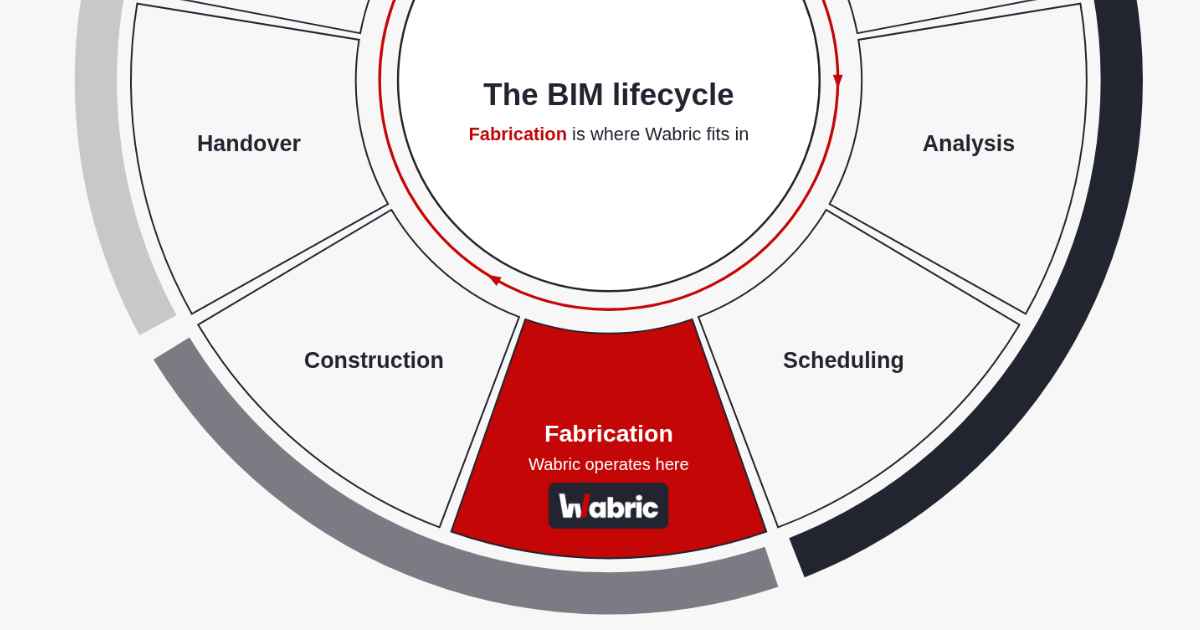
BIM models describe a building, and building digital twins are often built on that BIM data. Construction product manufacturers feed those models with BIM objects of their products, often as IFC or native Revit files.
Michael Grieves introduced the concept in 2002 as part of product lifecycle management. NASA researcher John Vickers suggested the name "digital twin" in 2010.