One configurator, your brand
Wabric's configurator can be fully branded to your company, logos, colors, and product rules included, without you building the software yourself. See how it works for a real product range.
See the CPQ platform →Key Takeaways
- A white label product configurator is a ready-made configurator you adapt to your own brand and product range, without building the software from scratch.
- Not every provider offers white label, and some only remove their own logo on more expensive plans. Wabric's configurator is fully branded to your company: logos, colours, slogans and product rules.
- The user journey is standardised to keep costs down, but tailored to your products and your sales process.
- Customers configure in real-time 3D and see the price instantly. Your sales team gets the request with every parameter, the bill of materials and the drawings attached.
- Getting your own takes 4 steps: map your needs, upload your product catalogue, add your drawings and define the rules.
Selling custom products can be complex. It doesn't have to be. A white label product configurator automates the quoting process, shows your products visually in real time and connects to the systems you already use. Whether you're in manufacturing or construction, your customers configure the product themselves and your team gets a complete, accurate request.
This article presents a configurator that can be customised with your products and branding, and used by practically any company. Unlike our earlier configurators, the white label configurator works for any company that sells custom-made products. We've standardised most of the user journey, but we still tailor it to the needs of each company and the products it sells.
What is a white label product configurator?
A white label product configurator is a ready-made configurator that a company adapts to its own brand and product range, without building software from scratch. Developed by Wenture, the Wabric configurator can be fully customised, visually and functionally: logos, colours, parameters and workflows. We maintain the system underneath. You get a branded, easy-to-use configurator that fits your sales process.
The main advantage of white label software is that you shape the configurator's features and attributes around your business. With Wabric, you design it to reflect your company's identity: your logos, colours, slogans and products, plus every configuration rule your products need.
That's not a given. Not every configurator provider offers white label, and some only remove their own logo when you move to a more expensive plan. With Wabric, your branding isn't an extra: the configurator is set up in your brand from day 1. It's embedded on your own website and runs in the languages you sell in. Wallenium's focus room configurator is a live example.
At the same time, the configurator's functions are as standardised as possible. That keeps the cost of creating and running your configurator down.
How does a white label product configurator work?
Let's look at the stages of the user journey and what each one does.
Login
The user journey can start with a login, but it's optional. Logging in lets you collect potential customer data from the very first step.
For the user, the advantage is that every configuration is saved as a project they can pause, review, change or delete later.
Each configurator can build its own user database or connect to an existing one. Users can log in through your website, ERP or PIM. Dealers and distributors can log in too and configure with their own account pricing through the Partner Portal.
Configuration selection
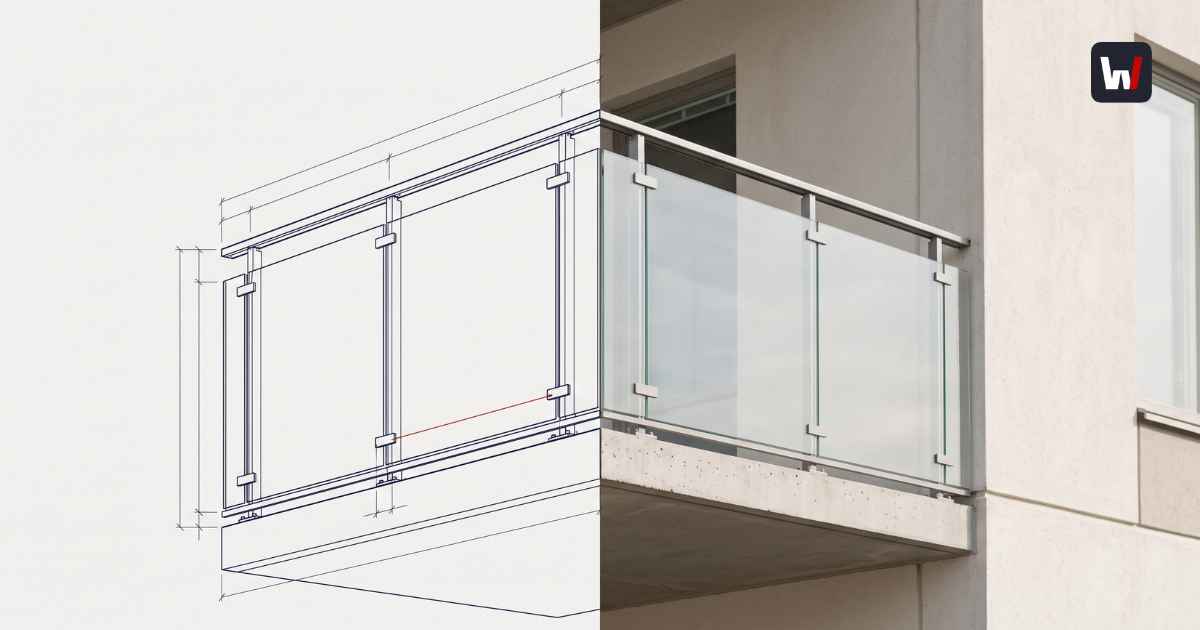
Next, the user creates a project and names it, for example "Metsa 15" after the building's address. A single project can hold several configurations. Say the building needs 2 balcony railings of different sizes: the user names them "Metsa Balcony 1" and "Metsa Balcony 2", enters the parameters for each balcony and picks the right railings and fittings.
Drawings
As the customer selects and changes parameters, the configurator shows the product visually and in real time. That helps both the customer and the product owner. Customers see a 3D model of exactly what they're ordering. You can automate top views, cross-sections and production drawings, which takes drafting work off your engineers. The same configuration can also produce CAD and BIM files (DXF, IFC, Revit or STEP) for architects and engineers working in their own models.
Price calculation
Based on the selected products, the configurator calculates the total price, and only valid, buildable combinations can be priced. Logged-in users value this the most: they see in real time how material and size choices change the price, and find the best option themselves.
Sending a request
The request form sends the customer's selection straight to your sales team, with every parameter attached. Customers don't have to repeat their choices, and your salespeople don't have to ask for details separately. Questions can still go back and forth when needed.
The request reaches a salesperson, who reviews it with the bill of materials and drawings already generated. Once everything is in order and the order is confirmed, it moves to production with the drawings and syncs to your ERP.
How do you order a white label product configurator for your products?
It takes 4 steps: mapping your needs, uploading your product catalogue, preparing the visual outputs and defining the rules. A first configurator typically goes live in 6-8 weeks.
1. Mapping needs
First, we review your sales process with you and identify the bottlenecks a configurator can fix. We also map which configurator outputs matter most to your company, whether that's drawings for engineers or visuals for customers, and which systems the configurator needs to connect to. Every company has different priorities, which is why we built a standard solution that adapts to different needs.
2. Product catalogue
We upload your product catalogue into the configurator with all the important parameters: length, weight, material, colour, placement and other details. If you already have a product information management (PIM) system, we mirror its data into the configurator through APIs. If you don't, the configurator has its own PIM module.
3. Visual outputs
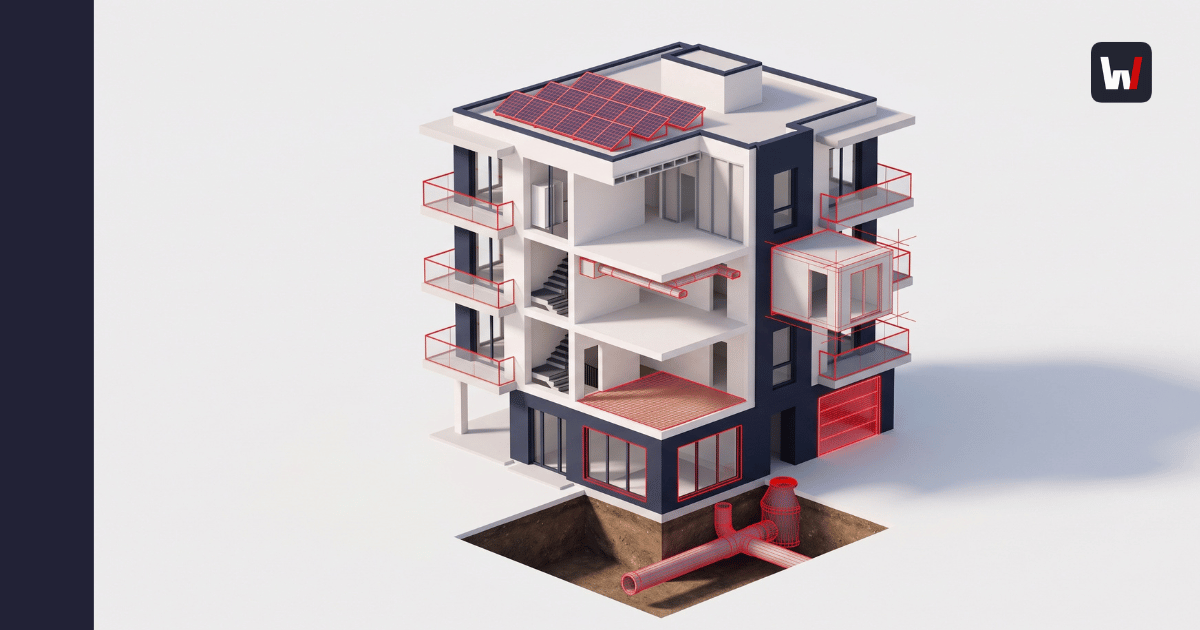
We need the drawings required to create a project. We can create visual materials ourselves, but ideally we get your product drawings: cross-sections, production drawings and other materials. Existing CAD models give setup a head start, and if you only have 2D drawings, we build the 3D models from those. We also offer BIM modelling, and the BIM models we create can be used in the configurator.
4. Rules
For the configurator to work, we need the rules that automate product configuration. In other words, we create the formulas that run the configurator. A formula's input could be which product combinations are possible, which fittings match which materials, and similar details.
Product configurators are a new stage in sales automation. We've seen visual configurators increase customer engagement, give customers a better overview of the products and get them to send inquiries. They also save the sales side a huge amount of time on communication, measurement clarifications and discrepancies.
The numbers back it up. Innore, a balcony railing manufacturer, saves 80 hours of sales time a month. At Krah Pipes, projects used to bounce up to 16 times over email; now sales and partners handle up to 80% of technical drawings and revisions themselves. Saku Metall cut its sales cycle from 2 weeks to 2 hours.
If you sell custom-made products, contact us, describe your product range, and we'll explain in more detail how a white label configurator can be implemented for it.
Summary
A white label product configurator gives you a configurator in your own brand without building the software yourself. Wabric's version is standardised to keep costs down and tailored to your products: customers log in, create projects, configure in real-time 3D and see the price instantly, and your sales team gets a complete request with the drawings attached. Getting one takes 4 steps: map your needs, upload your catalogue, add your drawings and define the rules.
Frequently Asked Questions
A pre-built, customisable configurator that a company adapts to its own brand and product range, without developing the software from scratch. The underlying system stays standardised to keep costs down, while the branding, parameters and workflows are tailored to each business.
With some providers, yes: their logo stays on the configurator unless you move to a more expensive plan, and some don't offer white label at all. With Wabric, the configurator is built in your branding as standard: your logo, colours, slogans and product rules.
Wabric plans start at €490 per month, plus a one-time setup fee for encoding your product logic. The setup fee depends on the number of product families, the complexity of the rules and whether 3D models already exist, and it's fixed before you sign. Full details are on the Wabric pricing page.
Yes. The Wabric configurator is embedded on your website, in your branding, and can run in the languages you sell in. Wallenium's focus room configurator, for example, runs on Wallenium's own website.
Yes. A configurator can build its own product database or integrate with your existing ERP or PIM through APIs, so product data isn't duplicated or kept in 2 places. Wabric syncs orders to ERP systems including SAP, Odoo, Microsoft Dynamics and Directo, and connects to Salesforce CRM.
It can. Beyond real-time 3D visuals for the customer, a configurator can automatically generate top views, cross-sections and production drawings, which cuts manual drafting for engineers. Wabric can also export CAD and BIM files (DXF, IFC, Revit or STEP) on its Enterprise plan.
A product catalogue with parameters such as dimensions, materials and colours, existing drawings or CAD files if available, and the business rules that decide which product combinations and materials work together. No 3D models? They can be built from your 2D drawings.
A first Wabric configurator typically goes live in 6-8 weeks.